
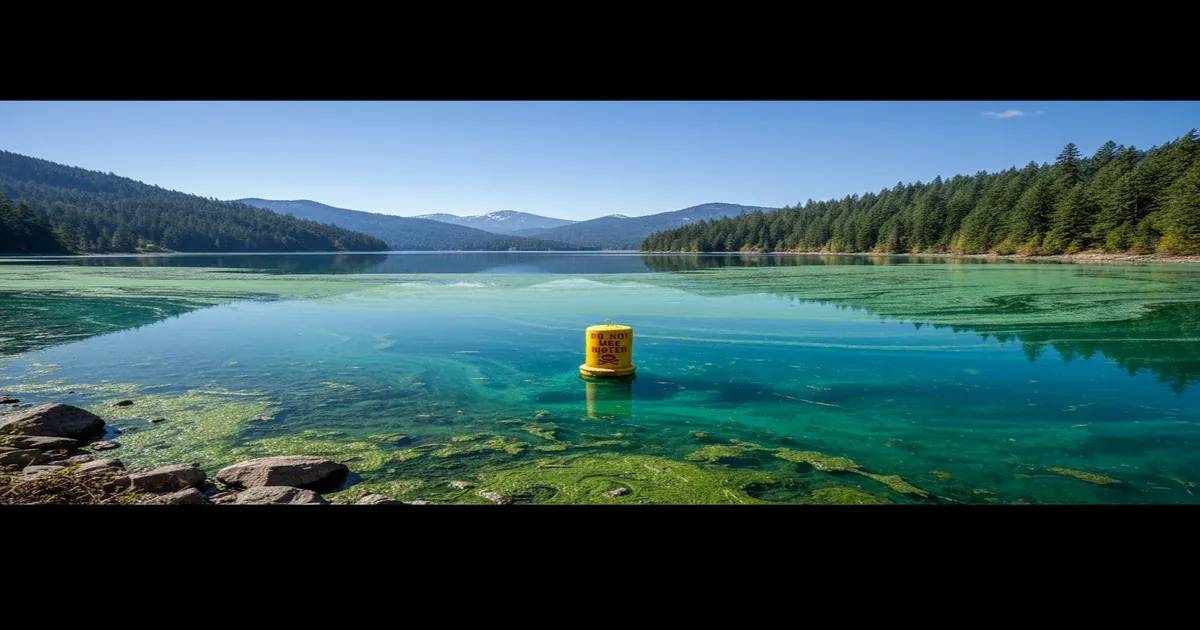
Salem, Oregon made national news in May 2018 for the wrong reasons. The city issued a “do not drink or boil” advisory — a rare directive, distinct from the more common boil water notice — warning residents that even boiling wouldn’t make the water safe. The culprit: cyanotoxins from a harmful algal bloom in Detroit Lake, Salem’s primary drinking water reservoir.
For three days, over 100,000 people in Salem and surrounding communities had no safe tap water. Schools closed. Hospitals scrambled. And Salem’s water utility faced hard questions about what it knew, when it knew it, and why it hadn’t prepared better.
Cyanotoxins: What Happened in Salem
Detroit Lake sits in the Cascade Mountains about 50 miles east of Salem. The reservoir is the city’s primary water source, stored behind Detroit Dam on the North Santiam River.
Harmful algal blooms (HABs) — typically caused by cyanobacteria (blue-green algae) — produce toxins including microcystin that can cause liver damage and are not removed by standard chlorination. In warm water with elevated nutrients, cyanobacteria can multiply rapidly.
In spring 2018:
- Unusual winter conditions followed by warm temperatures triggered an early and severe algal bloom in Detroit Lake
- Microcystin levels in the reservoir spiked
- Salem’s conventional treatment process was not equipped to remove cyanotoxins at the concentrations detected
- The city issued a “do not drink” advisory for infants, children under 6, pregnant and nursing women, the elderly, and immunocompromised individuals
The response was chaotic. Communication broke down. Bottled water sold out across the region. The governor declared a public health emergency.
Post-2018: What Changed
Following the crisis, Salem invested in:
- Powdered activated carbon (PAC) injection — A treatment technology that can adsorb cyanotoxins before they reach finished water
- Enhanced HAB monitoring — Real-time monitoring of Detroit Lake conditions with earlier warning triggers
- Emergency response planning — Protocols for cyanotoxin events, including pre-positioned bottled water supplies and communication systems
- Willamette River as backup — Salem maintains the ability to switch to Willamette River water as an emergency backup (with its own water quality challenges)
The improvements are real. But Detroit Lake continues to experience HABs, and climate change is expected to make conditions more favorable for algal blooms — warmer water, altered precipitation patterns — making this a recurring management challenge rather than a solved problem.
PFAS: An Emerging Concern
Salem’s water quality focus has been on cyanotoxins, but PFAS is emerging as a statewide concern in Oregon:
- Oregon has begun mandatory PFAS testing under the EPA’s new rules
- Salem’s source waters — Detroit Lake and the Willamette River — both receive runoff from developed areas
- Oregon Department of Environmental Quality has been investigating PFAS sources across the state
Salem Water has tested for PFAS. Early results have shown detections at low levels. As the state develops PFAS standards and the EPA’s new MCLs take effect, the regulatory picture will become clearer.
Willamette River: Backup Source with Its Own Issues
Salem’s emergency backup source, the Willamette River, is a much more impaired water body than Detroit Lake:
- The Willamette has a long history of industrial contamination, including PCBs, heavy metals, and petroleum products
- Agricultural runoff contributes nitrate and pesticides
- Urban stormwater from Portland and other upstream cities adds to the contaminant load
- The river receives treated wastewater discharges from dozens of communities upstream
The city’s Franzen Road intake on the Willamette can process this water, but it requires more intensive treatment and would not be considered as clean as the mountain reservoir source.
Lead and Distribution System
Salem Water has been conducting its lead service line inventory as required by the revised Lead and Copper Rule. Key concerns:
- Salem has older neighborhoods (particularly in the historic core) with potential lead connections
- The 2018 crisis required the city to flush its distribution system extensively, which can temporarily elevate lead levels by disturbing pipe scale
- Corrosion control treatment is maintained
What the Data Shows
From Salem Water’s most recent CCR:
- All regulated contaminants within EPA limits
- Cyanotoxins (now monitored explicitly): within Oregon health guidelines
- PFAS: detected at low levels, below current MCLs
- Lead at 90th percentile below action level
- Disinfection byproducts within limits
- No SDWA violations
What Salem Residents Should Do
- Sign up for water quality alerts — Salem Water has improved its notification system since 2018. Register to receive alerts.
- Understand “do not drink” vs. “boil water” — If Salem ever issues a cyanotoxin-based advisory, boiling won’t help. Certified point-of-use filters with activated carbon or reverse osmosis can remove cyanotoxins.
- Ask about current HAB status — During summer months, check Oregon DEA’s Harmful Algae Bloom (HAB) monitoring data for Detroit Lake.
- PFAS awareness — Request Salem Water’s most current PFAS test results and monitor updates as new federal rules take effect.
- Lead precautions — If your home is older, test your tap water for lead and consider a certified filter for drinking and cooking water.
The 2018 crisis was a wake-up call that Salem took seriously. The city’s water treatment has improved meaningfully. But the underlying driver — climate change warming mountain reservoirs and intensifying HABs — isn’t going away.
Water quality challenges like these aren’t unique to this area. Residents in Bend, Oregon Water Quality and Portland Water Quality face similar contamination concerns, while Eugene OR Water Quality deals with its own set of water infrastructure and quality issues.
If you’re concerned about your water quality, a certified water treatment professional can test your water and recommend appropriate filtration solutions.