Roanoke, Virginia — the largest city in western Virginia with about 100,000 residents — draws its drinking water from a network of reservoirs in the Blue Ridge Mountains. The source water is generally excellent, but what happens between the reservoir and your tap tells a different story.
Lead Service Lines: Roanoke’s Unfinished Business
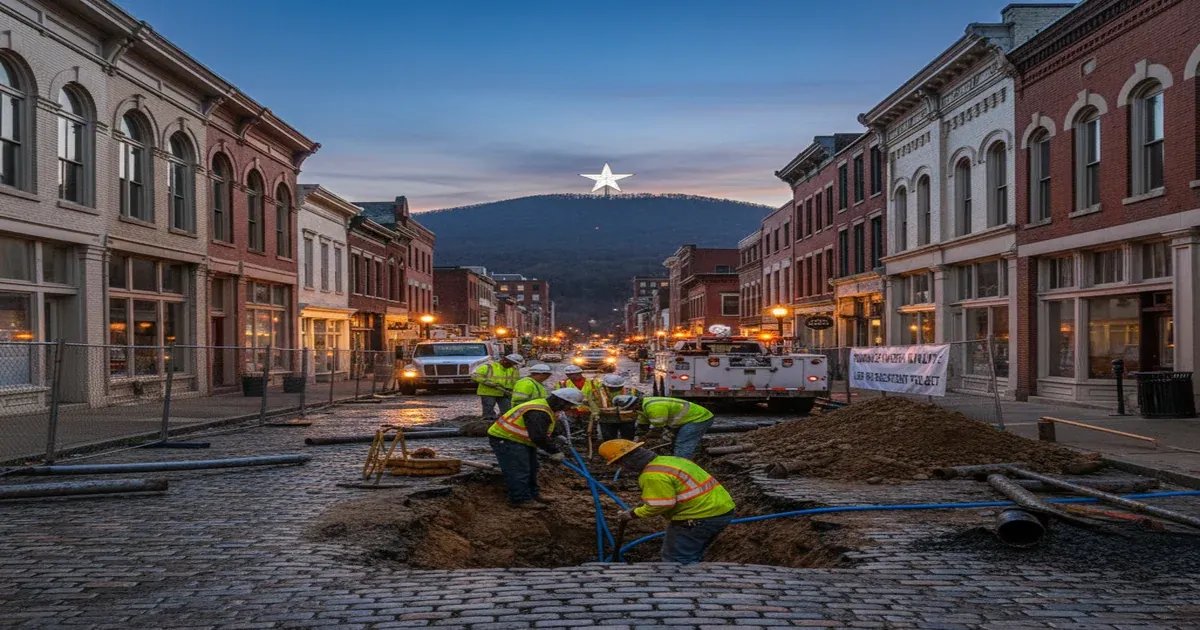
Like many older American cities, Roanoke has an unknown number of lead service lines connecting water mains to homes built before 1986. Virginia’s Lead Service Line Replacement mandate — driven by the EPA’s revised Lead and Copper Rule — requires utilities to inventory and replace these lines.
The Western Virginia Water Authority (WVWA), which serves Roanoke and surrounding areas, has been conducting its lead service line inventory. Key facts:
- Older neighborhoods at highest risk — Homes in Southeast Roanoke, Old Southwest, and other pre-WWII neighborhoods are most likely to have lead connections
- Partial replacements are problematic — Replacing only the utility-owned portion of a lead service line (up to the property line) can actually increase lead exposure temporarily by disturbing the protective mineral layer inside the pipe
- Corrosion control — WVWA adds orthophosphate to the water to create a mineral coating inside pipes that reduces lead leaching. This is effective but not a permanent solution.
The most recent lead testing under the Lead and Copper Rule showed 90th percentile levels below the EPA action level of 15 ppb. But any lead in drinking water is a concern, particularly for homes with infants or young children.
Karst Geology: Virginia’s Hidden Plumbing
The Roanoke Valley sits on karst terrain — limestone bedrock riddled with caves, sinkholes, and underground streams. This geology creates spectacular scenery (the region is near Luray Caverns and Natural Bridge) but also means:
- Groundwater is highly vulnerable — Contaminants on the surface can reach groundwater in hours or days, with minimal natural filtration
- Sinkholes can open without warning — Roanoke has experienced sinkholes in residential areas, and each one is a potential conduit for surface contamination to reach aquifers
- Spring-fed wells are unpredictable — Private wells in karst areas can show dramatic water quality changes after rain events
While Roanoke’s municipal supply comes from surface reservoirs (not karst springs), residents on private wells in the surrounding Roanoke County and Botetourt County areas face genuine karst-related water quality risks.
Coal Country Downstream Effects
Western Virginia has a long coal mining history, and while active mining in the immediate Roanoke area is limited, the broader region’s legacy includes:
- Acid mine drainage — Abandoned coal mines in the upper Roanoke River watershed can discharge acidic, metal-laden water
- Selenium — Coal mining mobilizes selenium from geological formations, and elevated levels have been detected in some Virginia waterways
- Turbidity and sediment — Strip mining and mountaintop removal in the broader Appalachian region increase sediment loads in rivers
The Carvins Cove Reservoir, Roanoke’s primary water source, is relatively well-protected, but the watershed isn’t immune from upstream impacts.
Infrastructure Age and Investment
WVWA manages a water distribution system that includes:
- Over 3,000 miles of water mains across the service area
- Some pipes dating to the early 1900s
- Multiple water treatment plants of varying age and capacity
The authority has invested in system upgrades, but the scale of deferred maintenance across Virginia’s water systems is substantial. A 2023 American Society of Civil Engineers report gave Virginia’s drinking water infrastructure a C- grade.
Issues residents may notice:
- Occasional discolored water after main breaks or flushing operations
- Low pressure events during peak summer demand
- Boil water advisories after significant main breaks (rare but they happen)
What the Data Shows
From WVWA’s most recent Consumer Confidence Report:
- All regulated contaminants within EPA limits
- Trihalomethanes and haloacetic acids detected (disinfection byproducts)
- Lead at the 90th percentile below the action level
- Copper within limits
- No Safe Drinking Water Act violations
The EWG Tap Water Database notes several contaminants detected above their health guidelines, including haloacetic acids and trihalomethanes.
What Roanoke Residents Should Do
- Find out about your service line — Contact WVWA to learn whether your home has a lead service line. The inventory process is ongoing.
- Use cold water for cooking and drinking — Hot water dissolves lead from pipes more readily than cold
- Flush your tap — Run cold water for 30 seconds to 2 minutes after it’s been sitting, especially in older homes
- Private well owners in karst areas — Test annually for bacteria, nitrate, and heavy metals. Test after heavy rain events when karst contamination risk spikes.
- Consider a certified filter — NSF 53-certified filters remove lead at the point of use. This is the most reliable protection in older homes.
Roanoke’s mountain-sourced water is a genuine asset. The challenges are mostly about what happens after the water leaves the treatment plant — and that’s where individual awareness and action make the most difference.
Water quality challenges like these aren’t unique to this area. Residents in Alexandria, Virginia Water Quality and Richmond Water Quality face similar contamination concerns, while Norfolk Water Quality deals with its own set of water infrastructure and quality issues.
If you’re concerned about your water quality, a certified water treatment professional can test your water and recommend solutions for your home.