
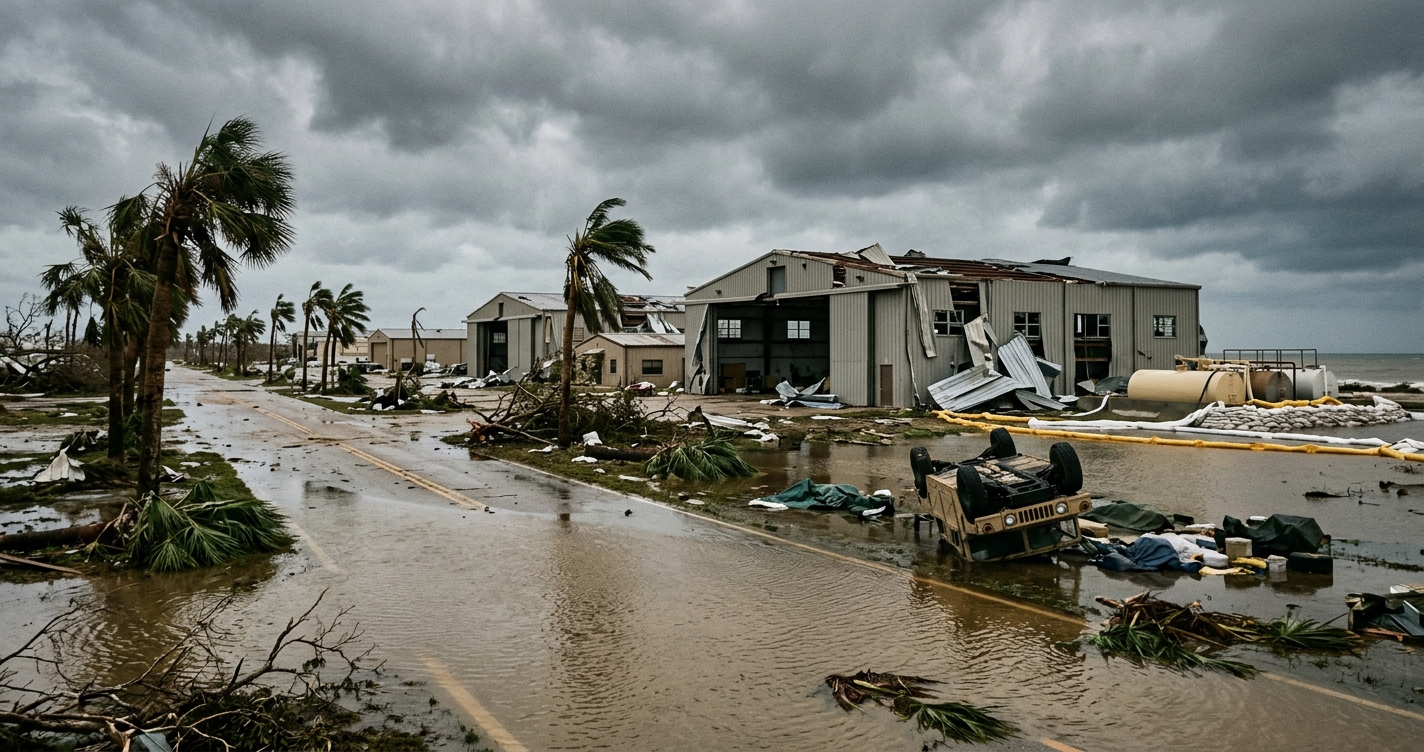
Panama City, Florida — population about 37,000 — was the bull’s-eye for Hurricane Michael on October 10, 2018. The Category 5 storm made landfall with 160 mph winds at nearby Mexico Beach, and Panama City took catastrophic damage. The storm destroyed Tyndall Air Force Base and devastated the city’s infrastructure, including its water system.
Hurricane Michael: Total System Failure
Hurricane Michael’s impact on Panama City’s water infrastructure was severe:
- Water treatment facilities damaged — The storm knocked out power and damaged treatment systems
- Distribution system breached — Wind and debris damaged water mains across the city
- Extended outages — Many areas of Panama City were without running water for days to weeks
- Boil water advisories — When service was restored, advisories remained in place for extended periods as the system was flushed and tested
- Wastewater catastrophe — Sewer system damage led to raw sewage releases into St. Andrew Bay and surrounding waterways
The rebuilding has been extensive, with federal and state disaster funding helping to modernize systems that were aging before the storm. But Panama City’s location on the Gulf Coast means another major hurricane is a statistical inevitability.
Tyndall Air Force Base: PFAS Legacy
Tyndall AFB, located on a peninsula southeast of Panama City, was nearly destroyed by Hurricane Michael. Before the storm, the base was already the subject of PFAS investigations:
- AFFF use — Decades of firefighting foam use at flight lines and fire training areas contaminated groundwater
- Post-hurricane complications — The storm surge that swept across Tyndall may have mobilized contaminated soils and redistributed PFAS across the base
- Ongoing investigations — The Air Force is conducting remedial investigations at Tyndall, but the hurricane damage complicated and delayed environmental assessment
- Off-base migration — PFAS plumes from the base can migrate into surrounding communities’ groundwater
The base is being rebuilt with $5 billion+ in funding, but the environmental contamination predates the hurricane and will outlast the reconstruction.
Coastal Aquifer and Saltwater Intrusion
Panama City draws from groundwater wells in the Sand-and-Gravel and Floridan Aquifer systems. Coastal Florida aquifers face:
- Saltwater intrusion — Sea level rise and overpumping can allow saltwater to migrate into freshwater zones
- Storm surge impacts — Hurricane storm surge can temporarily or permanently introduce saltwater into shallow aquifers
- Post-Michael changes — The massive storm surge that washed over low-lying areas around St. Andrew Bay may have affected shallow aquifer salinity in some areas
Bay County Utility Services monitors well water quality for saltwater intrusion indicators and manages pumping to maintain the freshwater-saltwater interface.
What the Data Shows
From Panama City Utilities’ most recent Consumer Confidence Report:
- All regulated contaminants within EPA limits
- PFAS testing being conducted under new federal requirements
- Disinfection byproducts within limits
- Lead at 90th percentile below action level
- No SDWA violations
What Panama City Residents Should Do
- Hurricane preparedness is water preparedness — Maintain at minimum 3 days of emergency water supply per person. Panama City knows from experience that water service can be disrupted for weeks.
- PFAS near Tyndall — Private well owners near the base should test for PFAS. Contact Tyndall’s environmental office for contamination maps.
- Post-storm protocols — After any hurricane or tropical storm, follow all boil water advisories completely. Don’t assume your water is safe when power and pressure are restored.
- Saltwater monitoring — If you notice changes in water taste (saltiness) or quality, report to the utility. Saltwater intrusion detection depends partly on customer reports.
- Infrastructure investment — Support continued water infrastructure improvements. Panama City’s rebuilt systems are newer, but Gulf Coast cities need resilient infrastructure that can withstand the next storm.
Panama City’s recovery from Hurricane Michael has been remarkable. The water system that was rebuilt is better than what came before. But the location hasn’t changed — and neither have the threats of hurricanes, military contamination, and coastal aquifer vulnerability.
Water quality challenges like these aren’t unique to this area. Residents in Pensacola FL Water Quality and Jacksonville Water Quality face similar contamination concerns, while Biloxi, Mississippi Water Quality deals with its own set of water infrastructure and quality issues.
If you’re concerned about your water quality, a certified water treatment professional can test your water and recommend appropriate solutions.