Dothan, Alabama — population about 72,000 — is the commercial hub of the Wiregrass Region in Alabama’s southeastern corner. The city depends almost entirely on groundwater, drawn from wells that tap into the productive aquifers underlying the Coastal Plain.
The water is generally clean. But two significant contamination sources are changing the picture.
Fort Novosel (Fort Rucker): PFAS from Helicopter Country
Fort Novosel, renamed from Fort Rucker in 2023, is the U.S. Army’s Aviation Center of Excellence — the primary helicopter training installation for the Army. Located about 20 miles northwest of Dothan, the base covers over 60,000 acres and has trained aviators since 1942.
Helicopter operations involve extensive use of AFFF (aqueous film-forming foam) at flight lines, hangars, and crash response training areas. The PFAS contamination picture:
- Multiple fire training areas across the installation have contaminated groundwater
- Helicopter crash response exercises use AFFF in scenarios designed to simulate aircraft fires
- Groundwater migration — The Coastal Plain aquifer system beneath Fort Novosel is sandy and permeable, allowing PFAS to move significant distances
- Off-base communities — Small communities and rural residents near the base may have contaminated private wells
The Department of Defense has begun environmental investigations at Fort Novosel, but the installation’s size and decades of AFFF use suggest the contamination footprint is substantial.
Agricultural Contamination: Peanut Capital of the World
Dothan bills itself as the “Peanut Capital of the World,” and the Wiregrass Region is one of America’s most productive agricultural areas — peanuts, cotton, corn, and soybeans. The water quality implications:
- Pesticide use — Peanut and cotton farming rely on herbicides, insecticides, and fungicides. Some of these chemicals have been detected in Wiregrass Region groundwater.
- Nitrate — Fertilizer application contributes nitrate to groundwater through the sandy Coastal Plain soils
- Fumigants — Soil fumigation for peanut disease management uses chemicals that can leach into groundwater
- Ethylene dibromide (EDB) — This former soil fumigant, banned in the 1980s, persists in some southeastern U.S. groundwater. Alabama’s Department of Environmental Management has documented EDB in Wiregrass Region wells.
The sandy, permeable soils that make the region productive for agriculture also make the groundwater exceptionally vulnerable to surface contamination.
Dothan’s Municipal Water System
Dothan Utilities draws drinking water from a network of deep groundwater wells. The water is treated with:
- Chlorine disinfection
- Fluoride addition
- pH adjustment for corrosion control
The deep wells that serve the municipal system generally produce cleaner water than shallow private wells, because contamination from the surface takes longer to reach deeper aquifer zones. However, PFAS and some persistent agricultural chemicals can eventually reach deeper groundwater.
According to the most recent Consumer Confidence Report, Dothan’s water meets all EPA standards.
Private Well Vulnerability
Houston County and surrounding Wiregrass Region counties have significant numbers of private well users. These wells are often shallow, tapping into the upper portions of the Coastal Plain aquifer where:
- Agricultural chemicals are most concentrated
- PFAS from Fort Novosel may have migrated
- Bacterial contamination from septic systems is most likely
Alabama does not require private well testing, and many wells have never been analyzed for contaminants beyond basic bacteria.
What the Data Shows
From Dothan Utilities’ most recent CCR:
- All regulated contaminants within EPA limits
- PFAS testing being conducted under new federal requirements
- Trihalomethanes and haloacetic acids within limits
- Lead at 90th percentile below action level
- No SDWA violations
What Dothan Residents Should Do
- PFAS awareness — Ask Dothan Utilities for PFAS testing results. With Fort Novosel nearby, monitoring is important even though the deep municipal wells may be less affected.
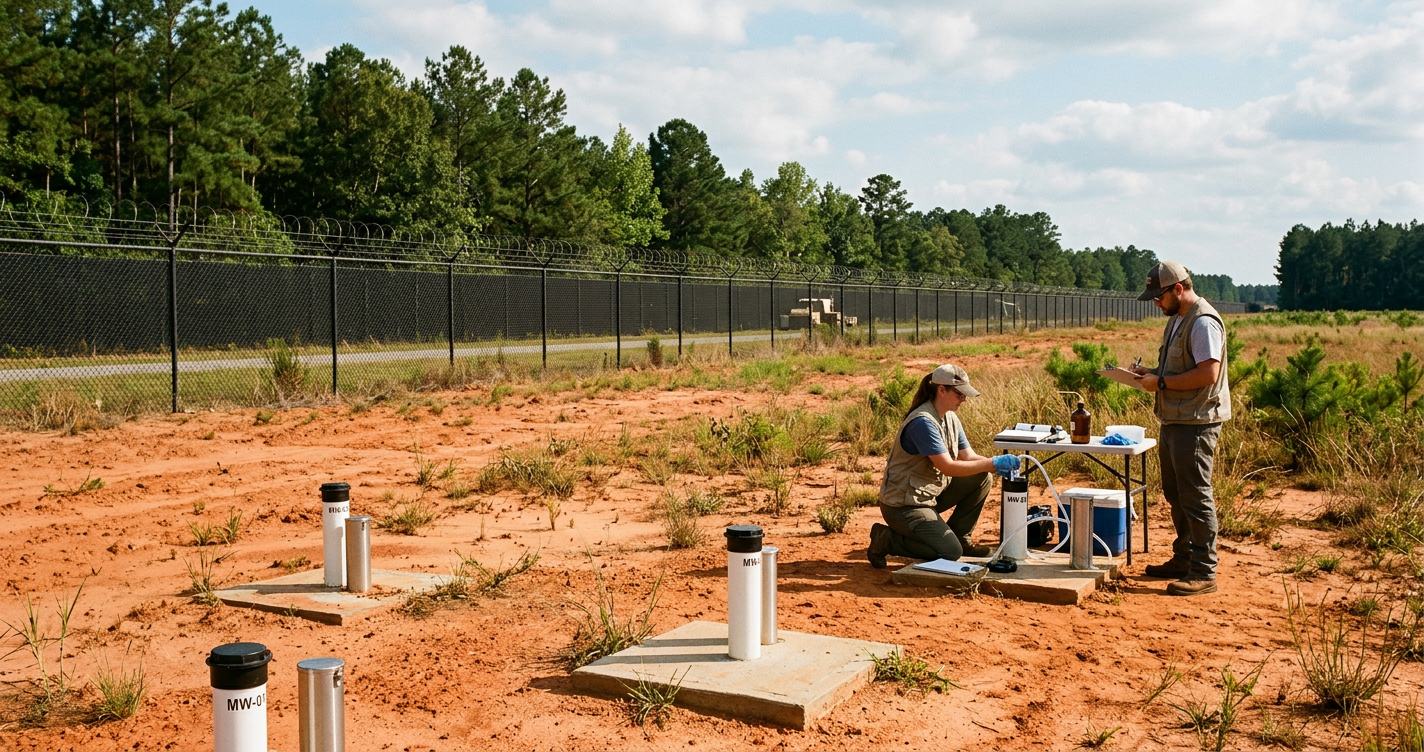
- Private well owners — Test for PFAS, nitrate, bacteria, and pesticides. The Wiregrass Region’s sandy soils offer little protection for shallow groundwater.
- Near Fort Novosel — If you’re on a private well within several miles of the base, PFAS testing is particularly important. Contact the Army’s environmental office for information about contamination boundaries.
- Agricultural workers — If you work with pesticides or live adjacent to heavily farmed land, well testing is essential — not just for drinking water, but for understanding your overall chemical exposure.
- Municipal customers — Dothan’s deep wells and treatment system provide good protection. Review the CCR and ask about PFAS specifically.
The Wiregrass Region’s agricultural productivity and military presence are sources of pride and economic stability. Managing the water quality impacts of both is part of sustaining that prosperity for the long term.
Water quality challenges like these aren’t unique to this area. Residents in Huntsville AL Water Quality and Albany, Georgia Water Quality face similar contamination concerns, while Mobile AL Water Quality deals with its own set of water infrastructure and quality issues.
If you’re concerned about your water quality, a certified water treatment professional can test your water and advise on treatment solutions.