
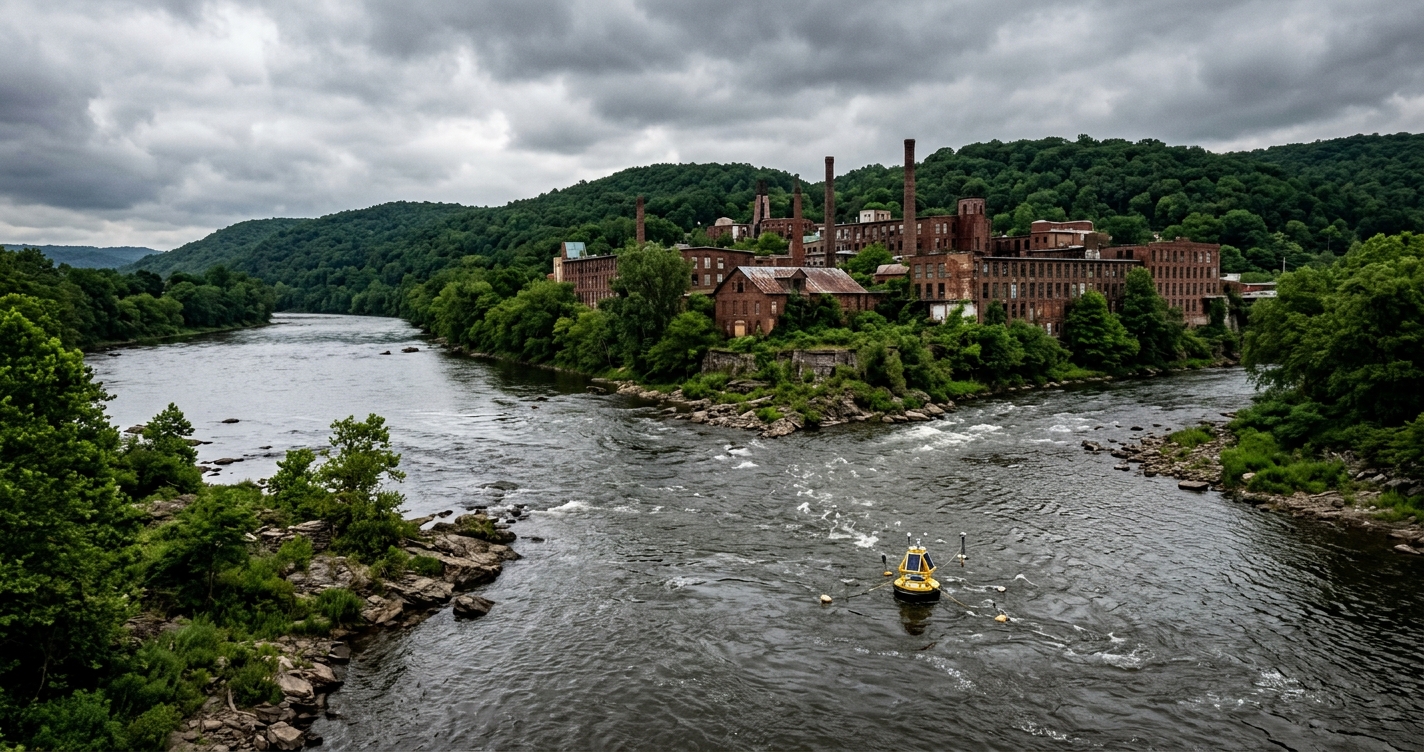
Binghamton, New York — population about 47,000 in a metro area of roughly 250,000 — sits at the confluence of the Susquehanna and Chenango Rivers in New York’s Southern Tier. For decades, this region was IBM country. The company’s birthplace in nearby Endicott employed tens of thousands and drove the regional economy.
IBM also left behind one of the most extensive solvent contamination plumes in the northeastern United States.
The IBM/Endicott Superfund Sites
IBM operated manufacturing facilities in Endicott, Owego, and surrounding communities from the 1920s through the 2000s. The company used massive quantities of chlorinated solvents — primarily trichloroethylene (TCE) and tetrachloroethylene (PCE) — for degreasing and cleaning electronic components.
The contamination scope is staggering:
- Multiple TCE plumes extend beneath Endicott and into surrounding communities, covering square miles of the aquifer
- The Endicott Area-Wide Investigation identified dozens of contamination sources across the former IBM campus and adjacent properties
- Vapor intrusion — TCE in groundwater evaporates and can seep up through foundations into homes and buildings. The New York State Department of Health has installed sub-slab depressurization systems in over 400 homes and buildings in the Endicott area.
- The contamination is deep — Some TCE has migrated into bedrock fractures, making full cleanup extraordinarily difficult and potentially impossible with current technology
The EPA’s Superfund program and New York State’s DEC have been managing cleanup for decades. IBM has funded much of the remediation, but the company has also been criticized for the slow pace and limited scope of its response.
Susquehanna River: Binghamton’s Water Source
The City of Binghamton draws its drinking water from the Susquehanna River and from Susquehanna River-fed wells. The Susquehanna is the longest river on the East Coast and drains a watershed that includes:
- Agricultural regions in Pennsylvania and New York contributing nitrate and sediment
- Former mining areas in northeastern Pennsylvania (acid mine drainage from anthracite coal)
- Industrial discharge from manufacturing along the river corridor
- Natural gas development — The Marcellus Shale gas boom in Pennsylvania brought thousands of wells to the upper Susquehanna watershed, with associated concerns about wastewater disposal and potential groundwater contamination
Binghamton’s water treatment plant uses conventional treatment including filtration and chlorine disinfection.
Flooding: The 2006 and 2011 Disasters
The Southern Tier has been hit by catastrophic floods:
- June 2006 — The Susquehanna crested at historic levels, flooding downtown Binghamton and surrounding communities
- September 2011 — Tropical Storm Lee caused even worse flooding, with the river reaching record stage. The floods damaged water infrastructure, released contamination from flooded industrial sites, and overwhelmed wastewater systems.
Each flood event can mobilize contamination from the IBM plumes and other industrial sites, potentially affecting both surface water and groundwater quality.
Health Concerns in the Southern Tier
The Endicott area has faced persistent questions about health impacts from IBM’s contamination:
- Cancer cluster investigations have been conducted, with some studies showing elevated cancer rates in areas overlying the TCE plumes
- TCE is classified as a known human carcinogen by the EPA
- Vapor intrusion means residents can be exposed through indoor air, not just drinking water
- The psychological toll on communities living above contaminated plumes is significant and ongoing
What the Data Shows
From Binghamton’s most recent Consumer Confidence Report:
- All regulated contaminants within EPA limits
- The municipal water supply (sourced from the Susquehanna) is upstream of and separate from the IBM plumes
- Trihalomethanes and haloacetic acids within limits
- Lead at 90th percentile below action level
- No SDWA violations
What Binghamton-Area Residents Should Do
- Know if you’re in the plume — The NY DEC maintains maps of the Endicott contamination area. If you live in Endicott or adjacent communities, check whether your property is in a vapor intrusion monitoring zone.
- Vapor intrusion systems — If you have a sub-slab depressurization system installed by IBM/DEC, keep it running. These systems work, but only when they’re operating.
- Private well owners — If you’re on a private well in the Southern Tier, test for VOCs (particularly TCE and PCE), especially if you’re in or near Endicott.
- Municipal water is separate — Binghamton’s municipal supply is not directly affected by the IBM plumes, but understanding your specific water source is important.
- Health screening — If you’ve lived in the Endicott vapor intrusion area, discuss potential exposure history with your healthcare provider.
The Southern Tier’s IBM legacy is a textbook case of how industrial prosperity and environmental contamination can be two sides of the same coin. The cleanup will continue for decades. The contamination may never be fully removed.
Water quality challenges like these aren’t unique to this area. Residents in Syracuse NY Water Quality and Hoosick Falls Water Quality face similar contamination concerns, while Newburgh, NY Water Quality deals with its own set of water infrastructure and quality issues.
If you’re concerned about your water quality, a certified water treatment professional can test your water and recommend appropriate solutions.