
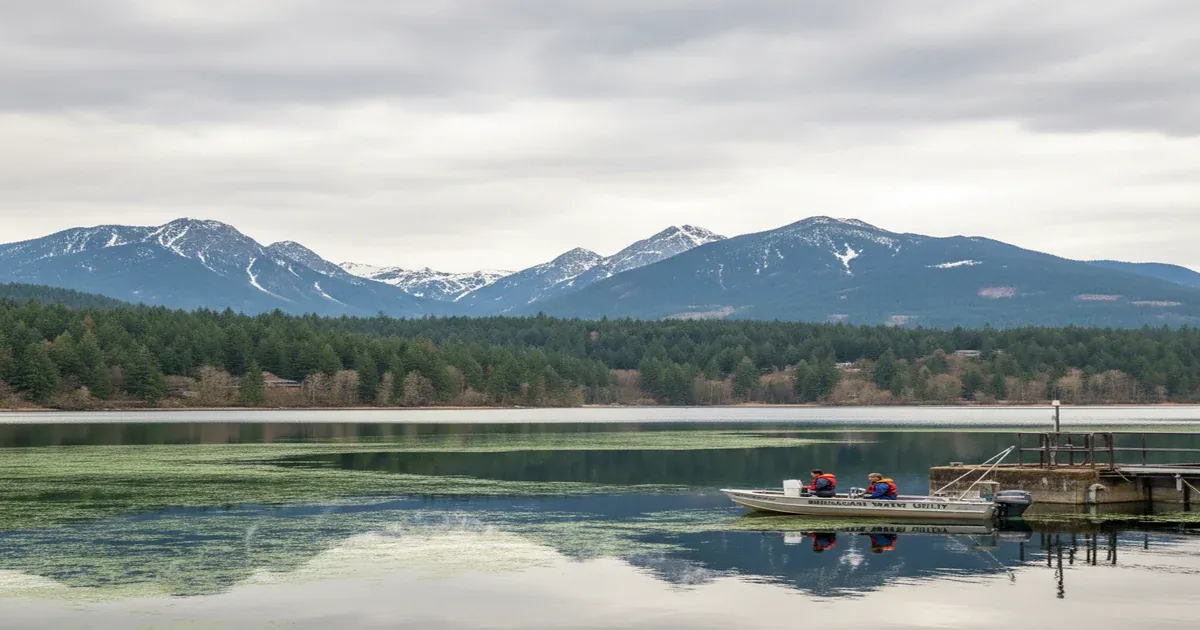
Bellingham, Washington — population about 92,000 — draws its drinking water from Lake Whatcom, a long, fjord-shaped lake tucked between Lookout Mountain and the foothills of the Cascades. The lake is both the city’s water supply and one of the most fought-over environmental battlegrounds in Washington State.
Lake Whatcom: Beautiful and Besieged
Lake Whatcom provides water for Bellingham and surrounding Whatcom County — about 100,000 people total. The lake is fed by creeks and streams draining a 72-square-mile watershed that includes both protected forest and rapidly developing residential areas.
The core water quality tensions:
- Phosphorus — The lake has been classified as impaired under the Clean Water Act for phosphorus. Elevated phosphorus from stormwater, septic systems, and development drives algal growth and can deplete oxygen in the lake’s depths. Bellingham and Whatcom County have spent decades fighting over land use in the watershed.
- Development pressure — The city of Bellingham only controls a portion of the watershed. Large areas of the lake’s drainage basin are in unincorporated Whatcom County, where development decisions are made by a separate government with different priorities.
- Septic systems — Older homes on the lake shore and in the watershed use septic systems that can fail and leach nutrients and bacteria into the lake
- Stormwater — Impervious surfaces from roads and development flush petroleum products, metals, and bacteria into the lake during rain events
The City of Bellingham has been aggressively acquiring watershed land when it comes available, but the process is slow and funding is limited.
The Aluminum Smelter: A PFAS Legacy
The Intalco aluminum smelter operated in Ferndale, about 10 miles northwest of Bellingham, from 1966 until 2020 when it was idled. Aluminum smelting uses a process that historically involved PFAS compounds (perfluorooctanoic acid, PFOA, and related substances), and Intalco is one of several Washington State aluminum smelters with documented PFAS contamination.
The contamination picture:
- PFAS in groundwater near the Intalco facility in Ferndale
- Potential migration — Groundwater flow patterns in the Ferndale/Bellingham area mean contamination can migrate toward lower-elevation areas and waterways
- PFAS in Puget Sound — PFAS has been detected in Puget Sound fish and shellfish, contributing to consumption advisories
- Washington State has adopted strict PFAS standards, and testing of Bellingham’s water supply has been ongoing
Bellingham’s water treatment plant has been tested for PFAS. The utility has reported detections, with levels monitored relative to Washington State’s strict criteria.
Whatcom Creek and Industrial History
Bellingham’s industrial heritage includes more than aluminum:
- Bellingham Bay has received decades of industrial discharges, and sediment contamination in the bay includes heavy metals, PCBs, and petroleum products
- Whatcom Creek runs through the city and suffered a catastrophic gasoline pipeline explosion in 1999 that killed three people and severely contaminated the creek
- Chlorinated solvents from various industrial operations have been detected in Bellingham-area groundwater
Water Treatment: A Multi-Step System
The city’s Lake Whatcom Water and Sewer District (in partnership with Bellingham) operates a water treatment plant that includes:
- Conventional filtration and coagulation
- Chloramine disinfection
- UV treatment
- Granular activated carbon (GAC) — which provides some PFAS removal
The GAC addition is particularly relevant given regional PFAS concerns. The treatment system is modern and well-operated.
What the Data Shows
From Bellingham’s most recent Consumer Confidence Report:
- All regulated contaminants within EPA and Washington State limits
- PFAS detected at low levels, below Washington’s strict standards
- Phosphorus in source water (Lake Whatcom) is the most significant ongoing concern, though treatment removes it before distribution
- Lead at 90th percentile below action level
- No SDWA violations
What Bellingham Residents Should Do
- Support watershed protection — The best protection for Lake Whatcom is keeping the watershed clean. Support land acquisition programs and responsible development policies in the watershed.
- PFAS updates — Washington State has some of the nation’s most protective PFAS standards. Ask Bellingham Water about PFAS test results relative to both state and new federal standards.
- Lake Whatcom users — Don’t use motorboats on the lake (already restricted), pick up pet waste near watershed tributaries, and manage fertilizer and herbicide use on lakeside properties.
- Private well owners — In areas near Ferndale or with industrial history, test for PFAS, chlorinated solvents, and heavy metals.
- Septic system maintenance — If your property drains to the Lake Whatcom watershed, keep your septic system properly maintained and inspected.
Bellingham’s water story is fundamentally about land use — who controls the watershed, and how they use it. The lake is worth fighting for. And the fight has been going on for decades, with no clear end in sight.
Water quality challenges like these aren’t unique to this area. Residents in Seattle Water Quality and Tacoma WA Water Quality face similar contamination concerns, while Bremerton WA Water Quality deals with its own set of water infrastructure and quality issues.
If you’re concerned about your water quality, a certified water treatment professional can test your water and recommend appropriate treatment solutions.