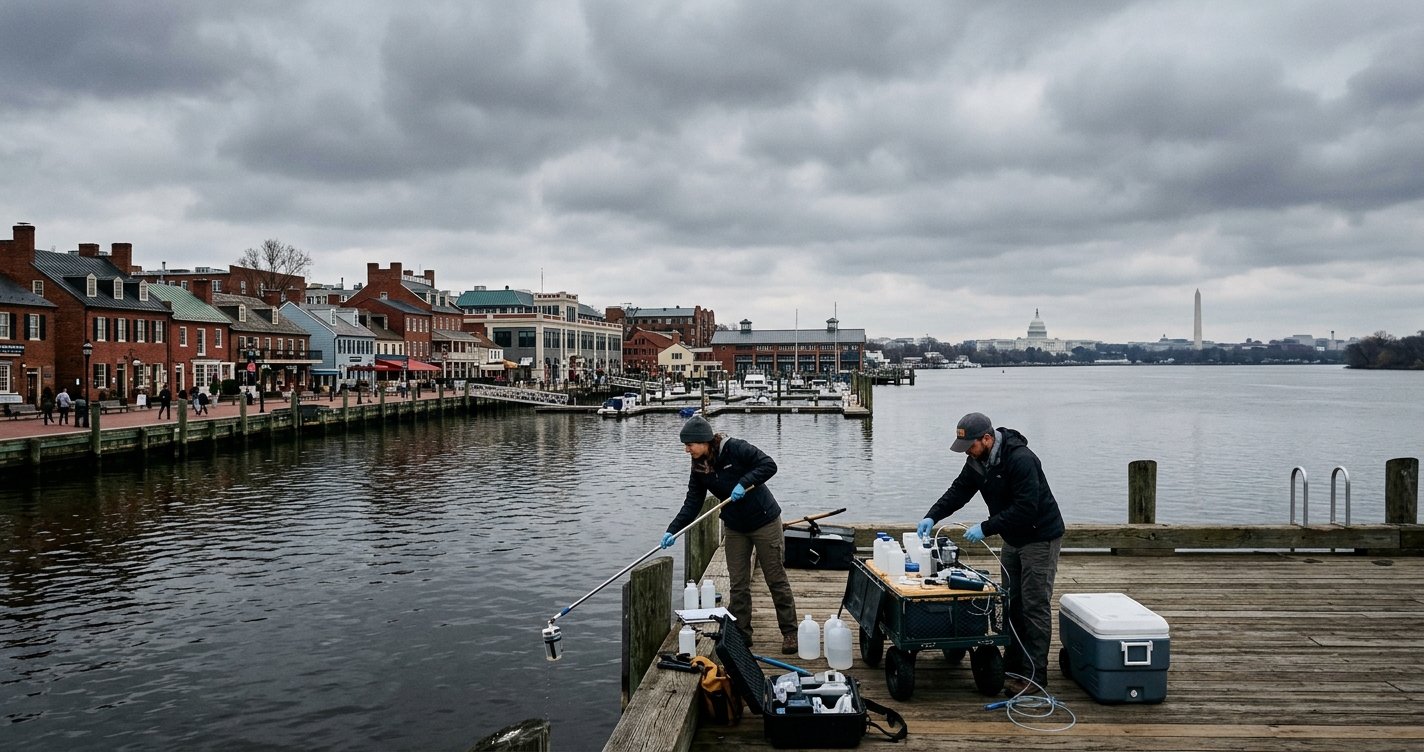
Alexandria, Virginia — population about 160,000 — is one of the oldest cities in America, founded in 1749 and situated on the Potomac River directly across from Washington, D.C. The city’s Colonial-era charm attracts tourists and homebuyers alike, but beneath the cobblestones lies a water infrastructure that reflects both the city’s age and its modern challenges.
Potomac River: The DC Metro’s Shared Water Supply
Alexandria Renew Enterprises handles wastewater, while Virginia American Water (a subsidiary of American Water Works) provides drinking water. The source: the Potomac River, which serves as the drinking water supply for over 5 million people in the DC metro area.
The Potomac carries the cumulative impact of its 14,670-square-mile watershed:
- Agricultural runoff — The Shenandoah Valley and other agricultural areas upstream contribute nitrate, phosphorus, and sediment
- Urban stormwater — The DC metro area’s sprawling development flushes petroleum products, heavy metals, microplastics, and bacteria into the river
- PFAS — Multiple PFAS sources exist in the Potomac watershed, including military installations (Fort Belvoir, Marine Corps Base Quantico, Joint Base Andrews), commercial airports, and industrial sites
- Pharmaceuticals — The Potomac has been the subject of research showing widespread pharmaceutical contamination from treated wastewater discharges
- The 2025 Potomac Interceptor collapse — A major sewage interceptor failure sent raw sewage into the Potomac, raising acute contamination concerns for downstream water intakes
Virginia American Water’s treatment plant uses multi-step treatment including coagulation, sedimentation, filtration, granular activated carbon, and chloramine disinfection. The GAC stage provides some PFAS removal.
Lead Service Lines: 275 Years of Plumbing
Alexandria is one of the oldest continuously occupied cities in the United States. That history means some of the oldest water infrastructure on the East Coast:
- Lead service lines are present throughout the city, particularly in Old Town and other pre-WWII neighborhoods
- Virginia American Water has been conducting lead service line inventory and replacement as required by the revised Lead and Copper Rule
- Corrosion control — The utility adds orthophosphate to water to create a mineral coating inside lead pipes, reducing lead leaching
- Lead solder — Homes built before 1986 may have lead solder in interior copper plumbing, even if the service line itself isn’t lead
The most recent testing under the Lead and Copper Rule showed 90th percentile lead levels below the EPA action level of 15 ppb. But in a city this old, individual homes can have significantly higher levels.
Combined Sewer Overflows: Alexandria’s Ongoing Problem
Like many older East Coast cities, Alexandria has a combined sewer system in its older districts. When it rains:
- Stormwater and sewage mix in shared pipes
- Heavy rain events overwhelm pipe capacity
- Untreated combined sewage overflows directly into the Potomac River and local waterways
Alexandria has a long-term control plan for combined sewer overflows, including tunnel and storage projects, but the work is expensive and ongoing. Every overflow event degrades recreational water quality and puts additional contamination into the drinking water source for downstream communities.
What the Data Shows
From Virginia American Water’s most recent Consumer Confidence Report for Alexandria:
- All regulated contaminants within EPA limits
- PFAS detected at low levels below current federal limits
- Trihalomethanes and haloacetic acids within limits
- Lead at 90th percentile below action level
- Nitrate within limits
- No SDWA violations
What Alexandria Residents Should Do
- Lead testing — If your home was built before 1986, test your tap water for lead. Contact Virginia American Water about your service line status.
- Run the tap — In older homes, flush cold water for 30 seconds to 2 minutes before using for drinking or cooking, especially first thing in the morning.
- PFAS monitoring — Ask Virginia American Water for their most current PFAS test results. With multiple military PFAS sources upstream, this is a long-term tracking issue.
- Don’t swim after rain — Combined sewer overflows make the Potomac and local waterways unsafe for recreational contact after significant rainfall.
- Point-of-use filtration — An NSF-certified filter rated for lead, PFAS, and VOCs provides the most comprehensive at-the-tap protection for older Alexandria homes.
Alexandria’s water quality reflects the reality of living in a major metropolitan area on a heavily used river system. The treatment is capable, but the source water challenges are significant and growing.
Water quality challenges like these aren’t unique to this area. Residents in Washington DC Water Quality and Roanoke, Virginia Water Quality face similar contamination concerns, while Norfolk Water Quality deals with its own set of water infrastructure and quality issues.
If you’re concerned about your water quality, a certified water treatment professional can test your water and recommend appropriate treatment solutions.