
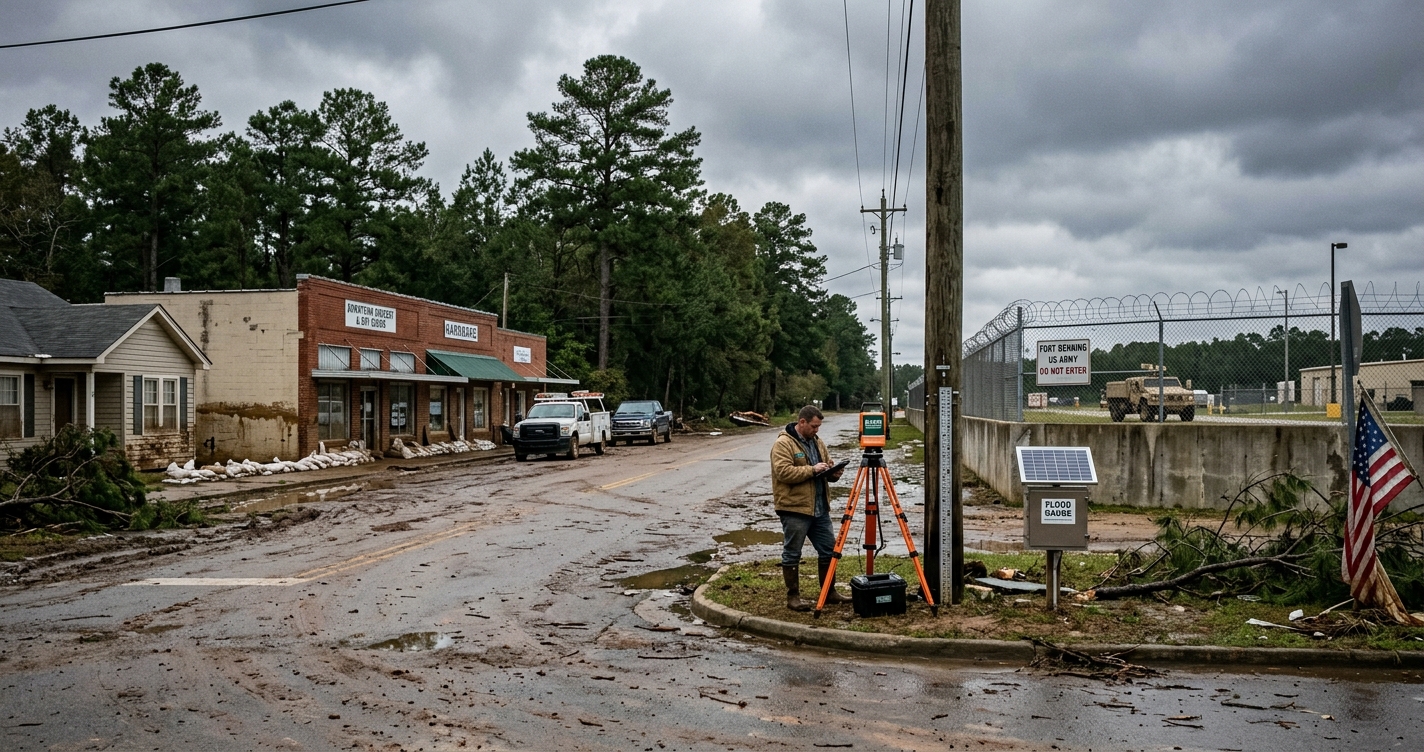
Albany, Georgia — population about 69,000 — sits at the confluence of the Flint River and Kinchafoonee Creek in the agricultural heart of southwest Georgia. The city has faced repeated natural disasters and a military contamination legacy that together create one of the most complex water quality situations in the rural South.
Marine Corps Logistics Base Albany: PFAS Contamination
Marine Corps Logistics Base (MCLB) Albany has operated since 1952, providing maintenance and logistics support for Marine Corps equipment. Like military installations nationwide, MCLB Albany used AFFF containing PFAS compounds for firefighting training and emergency response.
The contamination situation:
- PFAS detected in groundwater on and around the base through Department of Defense environmental investigations
- Proximity to residential areas — Unlike some remote military installations, MCLB Albany sits adjacent to the city, with residential neighborhoods near the base boundary
- Floridan Aquifer vulnerability — Southwest Georgia sits on the upper Floridan Aquifer system, and PFAS contamination can migrate through the productive limestone aquifer
- Ongoing investigation — The Marine Corps is in the remedial investigation phase for PFAS at MCLB Albany, but cleanup timelines at military PFAS sites typically extend over decades
Albany’s municipal water system has been tested for PFAS, with the city reporting compliance with current standards. However, private well owners in the MCLB Albany vicinity face greater exposure risk.
Flint River Flooding: Repeated Catastrophes
Albany’s relationship with the Flint River has been defined by flooding:
- 1994 Tropical Storm Alberto — The Flint River reached record flood stage, devastating Albany. The flood overwhelmed the city’s water and wastewater systems, caused widespread raw sewage contamination, and damaged water treatment infrastructure.
- 2017 Hurricane Irma — The Flint River flooded again, though not as severely as 1994. Water infrastructure was again affected.
- Chronic flood risk — Albany’s topography and river position make it one of the most flood-prone cities in Georgia
Each major flood event compromises water quality by:
- Overwhelming wastewater treatment, leading to raw sewage releases into waterways
- Flooding well heads and pumping stations, introducing contaminated floodwater into the drinking water system
- Damaging distribution infrastructure, creating opportunities for contamination to enter the system during depressurization
Agricultural Contamination: Southwest Georgia’s Reality
Dougherty County and surrounding areas are intensively farmed — primarily peanuts, pecans, cotton, and row crops. The water quality impacts:
- Nitrate — Agricultural fertilizer application contributes nitrate to both surface and groundwater. The Floridan Aquifer in this region is particularly vulnerable due to thin soils over limestone.
- Pesticides — Herbicide and insecticide use in row crop agriculture can reach groundwater through sinkholes and thin soils
- Concentrated animal feeding operations (CAFOs) — Poultry production in southwest Georgia generates waste that can contaminate surface and groundwater
- Irrigation withdrawal — Heavy agricultural pumping from the Floridan Aquifer has lowered water levels in some areas, potentially concentrating contaminants
Aging Infrastructure: A City Under Strain
Albany’s water and sewer infrastructure is old and has been battered by repeated disasters:
- Pipe age — Much of the distribution system dates to the mid-20th century, with some sections older
- Main breaks — Aging pipes in Albany’s clay soils are prone to breaks, particularly in areas with expansive soils
- Consent decrees — Albany has operated under EPA consent orders related to wastewater system overflows and compliance issues
- Funding challenges — As a relatively small city in a rural region, Albany faces disproportionate infrastructure investment needs relative to its tax base
The Albany Utility Board has made improvements, but the gap between infrastructure needs and available funding remains significant.
What the Data Shows
From Albany’s most recent Consumer Confidence Report:
- Drinking water meets EPA standards for regulated contaminants
- Disinfection byproducts within limits
- Lead at 90th percentile below action level
- PFAS testing shows low-level detections below current EPA limits
- Turbidity managed through treatment
What Albany Residents Should Do
- PFAS testing for well owners near MCLB — Private well owners near Marine Corps Logistics Base Albany should test for PFAS compounds. Contact the base environmental office for information about contamination extent.
- Flood preparedness — If you’re in a flood-prone area, know that flood events can temporarily compromise water quality system-wide. Keep emergency water supplies on hand.
- Boil water advisory compliance — When issued after floods or main breaks, follow advisories completely. Albany’s history of flood-related water contamination makes this critical.
- Private well testing in agricultural areas — Test annually for nitrate, bacteria, and pesticides. Southwest Georgia’s thin soils over limestone create direct pathways from farm fields to your well.
- Lead awareness — In older Albany homes, test for lead and consider a certified point-of-use filter.
Albany has shown remarkable resilience through repeated floods and economic challenges. But the city’s water infrastructure needs investment that matches the scale of the threats it faces.
Water quality challenges like these aren’t unique to this area. Residents in Dothan, Alabama Water Quality and Macon GA Water Quality face similar contamination concerns, while Jacksonville Water Quality deals with its own set of water infrastructure and quality issues.
If you’re concerned about your water quality, a certified water treatment professional can test your water and recommend appropriate treatment solutions.